
GPS early warning is accomplished by setting coordinates in the GPS early warning device through GPS satellites. For example, when an electronic eye is encountered, a coordinate is set directly unde

source:Industry News release time:2022-07-27 Hits: Popular:realtime gps tracker online

GPS early warning is accomplished by setting coordinates in the GPS early warning device through GPS satellites. For example, when an electronic eye is encountered, a coordinate is set directly under the electronic eye through related equipment, so that the early warning device equipped with this coordinate point data is installed. When this point is reached, an early warning will start about 300 meters before reaching the coordinate point, telling the owner that there is an electronic eye speed measurement in front of the car, and that speeding is not allowed, which will play an early warning role. Such an accuracy rate is related to the number of data points, which is mainly achieved by using satellite positioning.
Test machine to distinguish true and false
With the assistance of a friend from a car beauty shop, the reporter selected 4 so-called "GPS early warning machines". Through research and comparison of test machines, it was confirmed that one of them was a fake GPS "electronic dog". and came to the following conclusions:
A. GPS early warning device: an early warning point alarm once, one-way early warning; fixed point alarm, no interference; early warning accuracy rate can reach more than 98%. There are many types of music and voice to choose from, and the sound quality is better.
B. Fake GPS early-warning device: the same early-warning point alarms twice (both when approaching the early-warning point and leaving the early-warning point); it will be interfered by some public facilities such as electric towers and falsely alarm; there are many false alarms, and the accuracy rate is low and insufficient 70%; single alarm music and voice, poor sound quality
The Development of GPS in the New Century
Entering the 21st century, the application of global positioning system (GPS) will be strengthened and developed in all aspects. This article focuses on the latest development of GPS moving towards the 21st century, especially the product content, application and service of the current International GPS Service (1GS).
1. Development of GPS continuous operation station network and comprehensive service system
The IGS (International GPS Service) formed on the basis of the global ground-based GPS continuous operation stations (about 200) is an example of the GPS continuous operation station network and integrated service system. It provides various GPS information to users around the world free of charge, such as GPS precise ephemeris, fast ephemeris, forecast ephemeris, IGS station coordinates and their movement rates, the phase and pseudorange data of GPS signals received by IGS stations, and the earth's rotation rate. Wait. This information supports countless scientific projects in geodesy and geodynamics, including the ionosphere, meteorology, reference frames, precise time transfer, high-resolution estimates of the Earth's rotation rate and its changes, crustal motion, and more.
(1) There are three types of orbits now provided by IGS: one is the final (precision) orbit, which is obtained after 10-12 days and is often used for precise positioning; the second is the express orbit, which is obtained after 1 day and is often used in the atmosphere The water vapor content, ionosphere calculation, etc.; another category is the forecast orbit.
Estimates of GPS satellite clock biases are currently provided by only two IGS analysis centers. Among the nearly 200 global tracking stations that IGS currently operate permanently and continuously, nearly 70 external frequency standards are used, of which about 30 use hydrogen masers, about 20 use cesium atomic clocks, about 20 use rubidium atomic clocks, and the rest use GPS internal clocks crystal oscillator.
(2) IGS also provides polar shift and universal time information. The final daily polar coordinates (x, y) published by IGS have an accuracy of ±0.1mas, and the corresponding accuracy of Express is ±0.2mas. As a space geodetic surveying technology, GPS itself does not have the function of measuring Universal Time (UT). However, on the one hand, GPS satellite orbit parameters are related to UT, and on the other hand, it is also related to the determination of the Earth's rotation rate, which is also related to the rotation rate. is the time derivative of UT, so the IGS can still give the length of day (LOD) value for each day. IGS can now further determine nutation terms and high-resolution polar shifts (up to once every 2 hours instead of once a day now), the latter mainly due to the improvement of the observation quality of IGS stations. The speed and timeliness of transmission, as well as the improvement of data processing methods, do not change the essence, but the former is a leap in technology.
(3) An extremely useful and important information provided by the IGS is the coordinates of those continuously operating stations (tracking stations) of the IGS, the corresponding frames, epochs and station moving speeds. The accuracy of the former is better than 1cm, and the accuracy of the latter is better than 1mm/y. The coordinate reference frame used for IGS station coordinates is coordinated with the IERS. Started to use ITRF91 in late 1993, ITRF92 in 1994, ITRF93 from 1995 to mid-1996, ITRF94 from mid-1996 to April 1998, and ITRF96 on March 1, 1998, started on August 1, 1999 IGS uses ITRF97.
(4) The new contribution of IGS in measuring short-term nutation. As we all know, the movement of the earth's rotation axis on the earth's surface is called polar shift, and its movement in inertial space is called precession and nutation.
GPS technology cannot determine UT, but only day length. The same principle applies to nutation, that is, GPS data cannot determine longitude and inclination of nutation, but can determine the time variability (derivative to time) of these quantities. Based on this principle, the nutation amplitude of the short-term nutation term was estimated using 3 years of daily data of ψ and ε values and compared with the VLBI results. It is concluded that GPS method is superior to VLBI for the determination of short-period term of nutation, and VLBI is superior to long period of more than 1 month.
Read recommendations:
real-time gps tracking Solution
Next article:satellite-satellite tracking technology
Related Information
Pet GPS Tracker price
2023-04-11fleet management software webfleet solutions
2023-03-16Gps speed limiter company
2023-04-234G GPS Tracker manufacture
2023-04-23GPS Tracker Vendor
2023-04-11Hidden GPS Trackers wholesaler
2023-03-16Asset GPS Tracker
2023-03-16mini gps tracker manufacture
2023-04-23obd2 gps tracker verizon wholesaler
2023-04-23GPS Tracker wholesaler
2023-04-11TK200AM-Disposable GPS Tracker
2022-06-21VSL100 GPS Speed Limiter, Speed Governor
2022-06-19TK100N- Multi functional GPS Tracker
2023-10-06personal gps tracker Production
2022-09-06YG119- Hunting Dog GPS tracker
2023-10-07GPS Function Introduction
2022-11-02GPS knowledge base: what is RTK technology
2022-12-02Introduction to GPS application scope
2022-12-13The difference between GPS positioner and GPS navigator.GPS Tracker for vehicles manufacturer
2023-04-07Basic knowledge of GPS satellite positioning system
2022-08-20Six characteristics of GPS
2022-10-12Car GPS locator.gps tracker with magnet sales
2023-06-20Which is the best use of GPS positioning tracker for the loss of the elderly
2023-02-17GPS module accuracy.gps vehicle tracker Solution
2023-07-11Which industries need to use GPS positioner
2023-03-07The Meaning of GPS.4G GPS Tracker for vehicles wholesaler
2023-08-07The Development of GPS in the New Century
2022-09-24gps vehicle tracker.There are several types of car GPS locators
2023-10-24Gps speed limiter.100 yuan GPS locator opens a new chapter in electric vehicle anti-theft
2023-10-18GPS positioning monitoring system
2022-12-06Related Articles
Firstly, let's take a look at why GPS locators are inaccurate and have large errors. GPS positioning accuracy, generally within 10 meters if obtaining Beidou or GPS signals; If it is a signal...
GPS differential positioning technology is an important method to improve the positioning accuracy of the Global Positioning System (GPS). In traditional GPS positioning, satellite signals are af...
Vehicle GPS Navigation System Vehicle mounted GPS navigation system is an indispensable and important device in modern automobiles, providing drivers with convenient and accurate navigation service...
Handheld GPS positioning device is a portable and practical positioning tool widely used in outdoor exploration, geological exploration, forestry investigation and other fields. Handheld GPS posi...
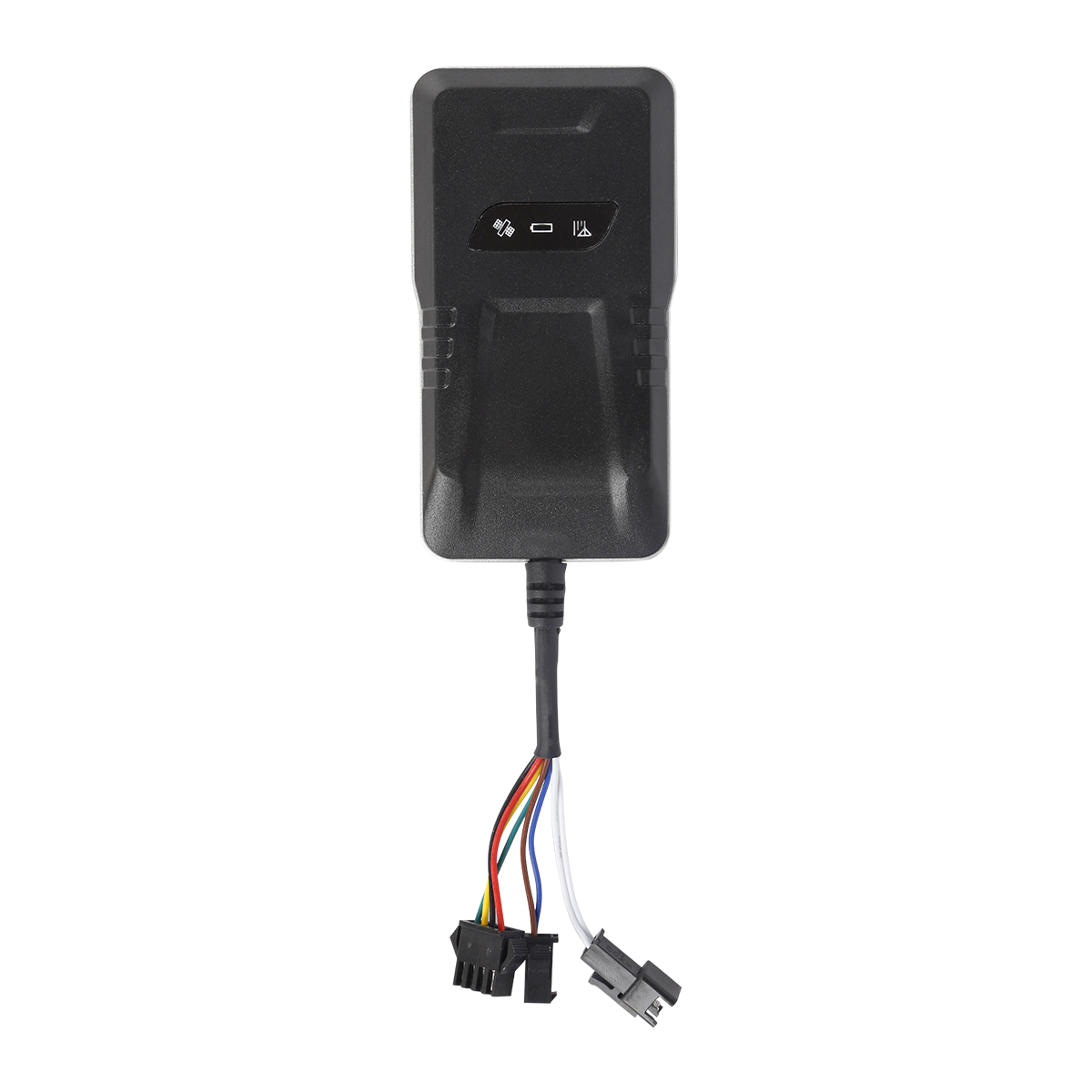
In modern society, high-precision GPS locators play a crucial role. It has brought many conveniences to people's lives and work with its excellent positioning accuracy and reliable performance...
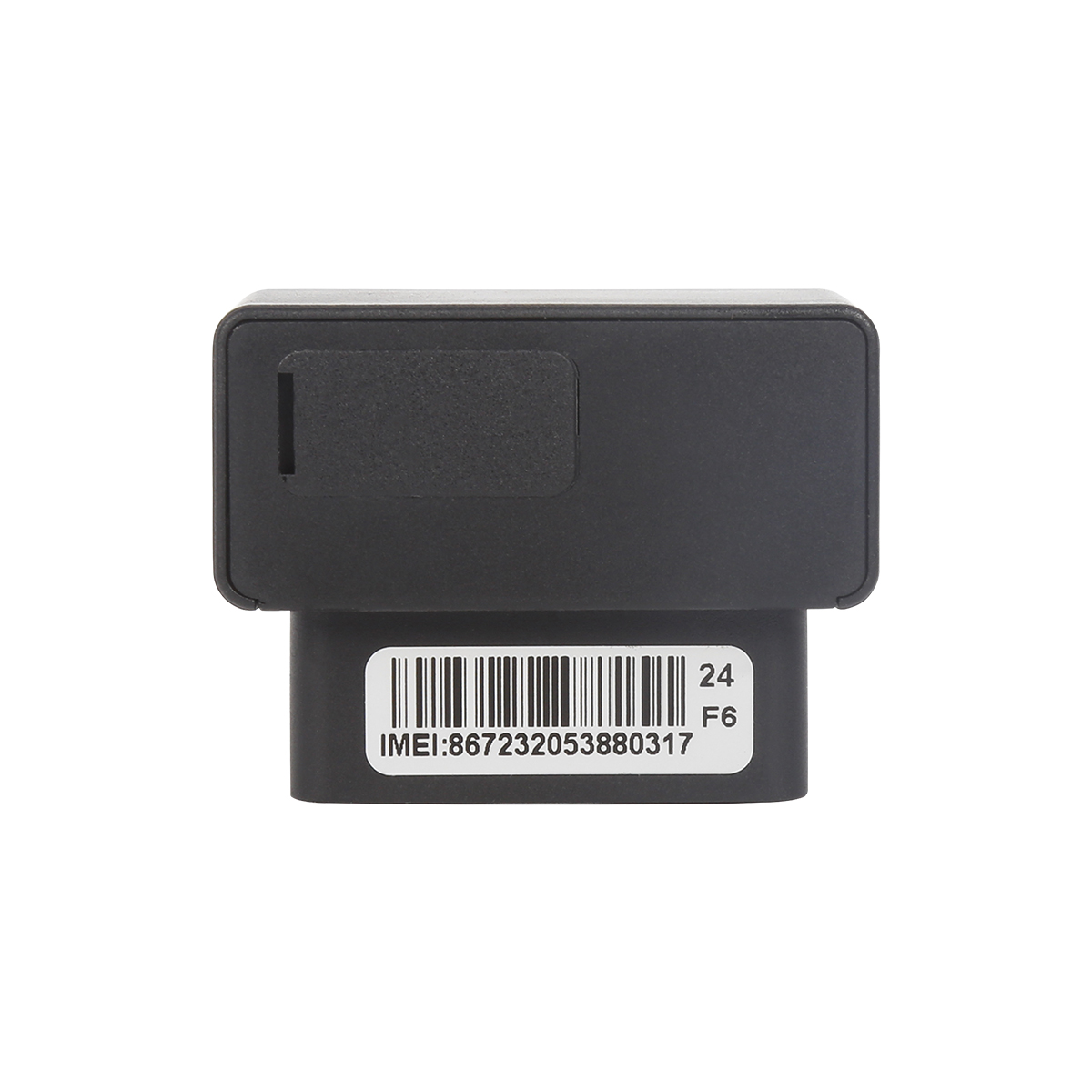
Real time GPS tracker is an advanced technology device that can track target objects in real-time at any time and any place, bringing great convenience to people's lives and work. The core fu...
alger.qin@6gpstracker.com
 Phone: +8619874120903
 Tel: +86 755 2370 2092
 Skype: castel.alger
 Whatsapp: +8619874120903
 Add: FL5, BLDG B, Lianxing Industrial Park, JiangJun Rd, Qiuchang, HuiYang District, Huizhou, Guangdong, China
Copyright © Huizhou Cantrack Technology Co., Ltd. All Rights Reserved. Sitemap “仲达荣”商标为惠州市仲达荣科技有限公司所有


Product

About
Support
News
Contact Us


 Language


 EN
EN

